RSS
Showing posts with label Year of Peace. Show all posts

Emmanuel

I don't like Advent for the same reason I don't like Lent.

I don't like the waiting.

Not because I'm impatient, necessarily (although I am). It's more because I find it rather depressing.

Emmanuel - God is With Us.

Growing up, we always put baby Jesus in the manger straight away, when the decorations went up the weekend after Thanksgiving, before Advent even began. He was the centre of the story. (Aside - my dad was, however, a stickler for the historicity of the wise men coming a few years later and therefore gently demanded that they remain outside the stable.)

We've been to four Christmas markets this year, each in a different city, and seen a creche/Nativity scene in each. Jesus is missing in each one of them. I know it's a big deal to place the symbolic baby in the scene on Christmas Eve or Christmas Day but it just seems weird without him.

He's with us, right?

Image by Jeff Carter via Flickr

This year is a different sort of Christmas observation for us in many ways. For the first time ever, I'm not with my parents and sister. Living abroad and having my own little family necessitates this, at least for this year.

Also, we haven't attended a traditional carol service or Christmas mass. Due to sickness/travel/work we only made it to one Quaker meeting, and that was last week. The Friends believe that the Inner Light (Holy Spirit) is always in us - there's no waiting for that presence to come, only listening and tuning in.

Emmanuel.

So I suppose I haven't been waiting this season. Just trying to take hold of that light, that presence. I'm trying to make sense of a lot of things, trying to live above them.

So I need Jesus to be here, not to be coming. Because he is, and he has.

God is with Us.

  • Digg
  • Del.icio.us
  • StumbleUpon
  • Reddit
  • RSS

Empathic Response

Empathy is the experience of understanding another person's condition from their perspective. You place yourself in their shoes and feel what they are feeling. Empathy is known to increase prosocial (helping) behaviors. While American culture might be socializing people into becoming more individualistic rather than empathic, research has uncovered the existence of "mirror neurons," which react to emotions expressed by others and then reproduce them.-Psychology Today

After another mum told me she was so tired from waking up twice the night before, I responded by saying something like "if only I just woke up twice! that would be heavenly!"

After I told another mum that I'd been up every 30 minutes with my little one (who was cutting her molars), she responded that her baby had just cut a tooth and she didn't even notice. My heart sank. I was at the end of my rope exhausted, while those two didn't have any difficulty at all.

Neither scenario is best.

I chatted with yet another mum this week who feels disconnected from her birth group because they have all become so competitive. Everyone has a better sleeper, eater, walker, talker, etc. than she does. She doesn't feel supported.

And then there's toddlers. When "Dash, we eat blueberries, not knives" results in a fit of hysteria, I want to tell her she's ridiculous.


"Empathic Lines" by Javier Del Amo Varona via flickr

I've basically decided I don't have the time or energy to be judgemental or competitive. But I do need to make the space to respond with grace.

No matter how much harder or easier my situation seems at the moment or in the past, I'm trying to respond to the present of my companions. "I'm sorry your sleep was disrupted, that's always difficult" is a better response than immediately dishing out my own concerns, trying to one-up the sleep deprivation. "Dash, I understand that you are confused that you can grab one thing but not the other and you're upset that you can't do something that seems interesting, but I want you to be safe" would be the kind of response that requires me to see things from her perspective, change my tone and support her while still setting boundaries.

We are wired for empathy, but it's also a learned skill. I'm trying to seize the different levels of practice offered in my life.

  • Digg
  • Del.icio.us
  • StumbleUpon
  • Reddit
  • RSS

Prayer for the First Day of School

Most Loving God -

Make me an instrument of Your peace.

Help me speak truth to power
And empower students to seek the truth.

Help me to provide creative avenues for the exploration of
History.

Help me connect students to the past,
To each other, and
To the world.

Help me to be a supportive colleague and
Collaborative employee.

Help me to make changes and
Accept when I can't.

Help me to take care of myself, thereby
Freeing myself to give to others.

Help me to be patient,
Kind,
Strong, and
Able.

Help me to model egalitarian living,
Life-long learning, and
Peace.

Help me to honor cultures,
Respect diversity, and
Facilitate understanding.

Help me to be present for my partner,
My family,
My students, and
My friends.

Help me to communicate clearly and
Expect wisely.

Help me to persevere,
To never discount a student,
To never make someone feel small.

Help me to avoid the temptations of gossip and
Sarcasm.

Help me to take a deep breath in difficult situations,
Assume the best, and
Discern conflict.

Help me to remember that a student's wellbeing
Is more important than my
Subject.

Help me to provide an environment that is
Safe and
Inspiring.

Help me to bring talent to the surface,
To encourage the smallest victories, and
To motivate greatness.

Help me to be myself.

Help me to see the wonderful things,
To document lovely moments.

Help me to be transparent while
Maintaining boundaries.

Help me to learn from constructive criticism and
Improve from others' ideas.

Help me not to feel insecure.

Help me to have confidence in my own abilities and
My own dreams.

Help me to be grateful,
Even when I am frustrated.

Help me to say thank you and
Provide encouragement.

Help me to relinquish fear and
Model courage.

And help my students to know that I care.

amen


  • Digg
  • Del.icio.us
  • StumbleUpon
  • Reddit
  • RSS

Day of Silence

Well, by day, I mean about 4 hours. But it felt long.

This week I spent a "day" of prayer at the Ruah Spirituality Center, part of the Sisters of Charity of the Incarnate Word, Villa de Matel convent in Houston. They have facilities for overnight, but the director recommended I start with a day since I was nervous about being in silence for that long.

I arrived at 10 and met a spiritual director who first showed me around. Then we talked for 20 minutes or so. She inquired as to what brought me there and then gave me some guidance as to how to approach the day. The main thing is it's a completely silent experience... so you don't talk to anyone even if you see people. The grounds are beautiful, and the floor where the Center is has several rooms set aside for prayer. They give even day retreaters their own dorm room, which was nice b/c I left my stuff and returned periodically, and took a quick nap at one point.

I started by sitting in the roof garden doing nothing, just sitting, observing. It took only a few minutes before I was crying grateful tears that also reflected how much inside I knew needed to come out. Then I spent about an hour journaling, returned to my room for a few minutes, and went to lunch. Eating lunch in silence with other people is strange. There were only a few other retreaters, all there for the same reason so I didn't feel rude, but it was weird. I spent the rest of the afternoon wandering the grounds, sitting on the balcony, visiting different rooms, praying in the chapel, enjoying being quiet and being so aware of God's presence. I really enjoyed the Kairos art room, where there were tons of art supplies and I could express my prayers creatively.


I've heard several people who've done retreats like this say that it takes them a whole day (or more) to really get quiet enough to get to the deep stuff. I can see that now. My intention for the day was to process grad school and pray about the next step. I felt complete in that. But I sort of felt I dealt with the "obvious" stuff, and while deep stuff (some of it surprising) did appear, it was still stuff near the surface. In other words, I see the value of some long, intentional silence.

The spiritual director suggested times of concentrated prayer intermixed with walks, observing nature, etc. (which she emphasized was prayer as well). She encouraged me to reflect on greatest challenges, joys, and wounds throughout grad school. To confront any anxieties I had about England and to ask God how I could be used there. And finally to ask God what could be done interiorally in me. That guidance resonated with me and although my mind wandered quite a bit, I was able to stay pretty focused and really soak in the silence. 

It was a beautiful experience and I recommend it to everyone. I've known about this place for a few years but was either nervous about going or didn't make it a priority and wish I had. Cost is by donation. I'm really grateful.

"Let us be silent that we may hear the Whisper of God." - Emerson

  • Digg
  • Del.icio.us
  • StumbleUpon
  • Reddit
  • RSS

Peace Camp

Last month, Eric and I were invited to speak with a small group of high school girls at their Peace Camp. It was an overnight workshop of sorts wherein they discussed peace in themselves, peace in their relationships, and peace in their world. They also drew a picture of a peaceful world as they brainstormed what that would look like.


Their world included "loving lingo," a peace army that would give hugs, universal healthcare and citizenship, food distribution centers, lifelong learning that would entail studying and teaching what you truly loved, conflict resolution teams, renewable energy, nuclear disarmament, and all kinds of green initiatives. It was inspiring to hear their vision.

We spoke with them about what it means to us to have a peaceful marriage. We shared with them how we learned peaceful conflict resolution, how we pursue equality, how we remove un-peaceful distractions, how we navigate challenges, how we make no assumptions about "roles" but base the rhythm of our relationship on who we are, how we strive to respect and love each other unconditionally, how we are continually learning, etc. The answer to most of their questions was "Well, we talk about it. A lot." They wanted to know if our throats ever got dry from talking so much. Of course, they do. :)

Overall it was a great experience, and it made me thankful for peace on all scales. In other words, being truly at peace with your spouse is perhaps as important as nations being at peace with each other. A young woman who is inspired to make affordable solar panels so thin that you can roll out on the roof (and after meeting this girl, I'm sure she will invent such a thing) will be a part of creating peace on multiple levels. I believe in a deep and abiding peace found in Christ, therefore I believe "world peace" is not a trite concept. And it starts with letting the peace of Christ which transcends all understanding transform my understanding.

  • Digg
  • Del.icio.us
  • StumbleUpon
  • Reddit
  • RSS

My Year of Peace: Peace and Forgiveness


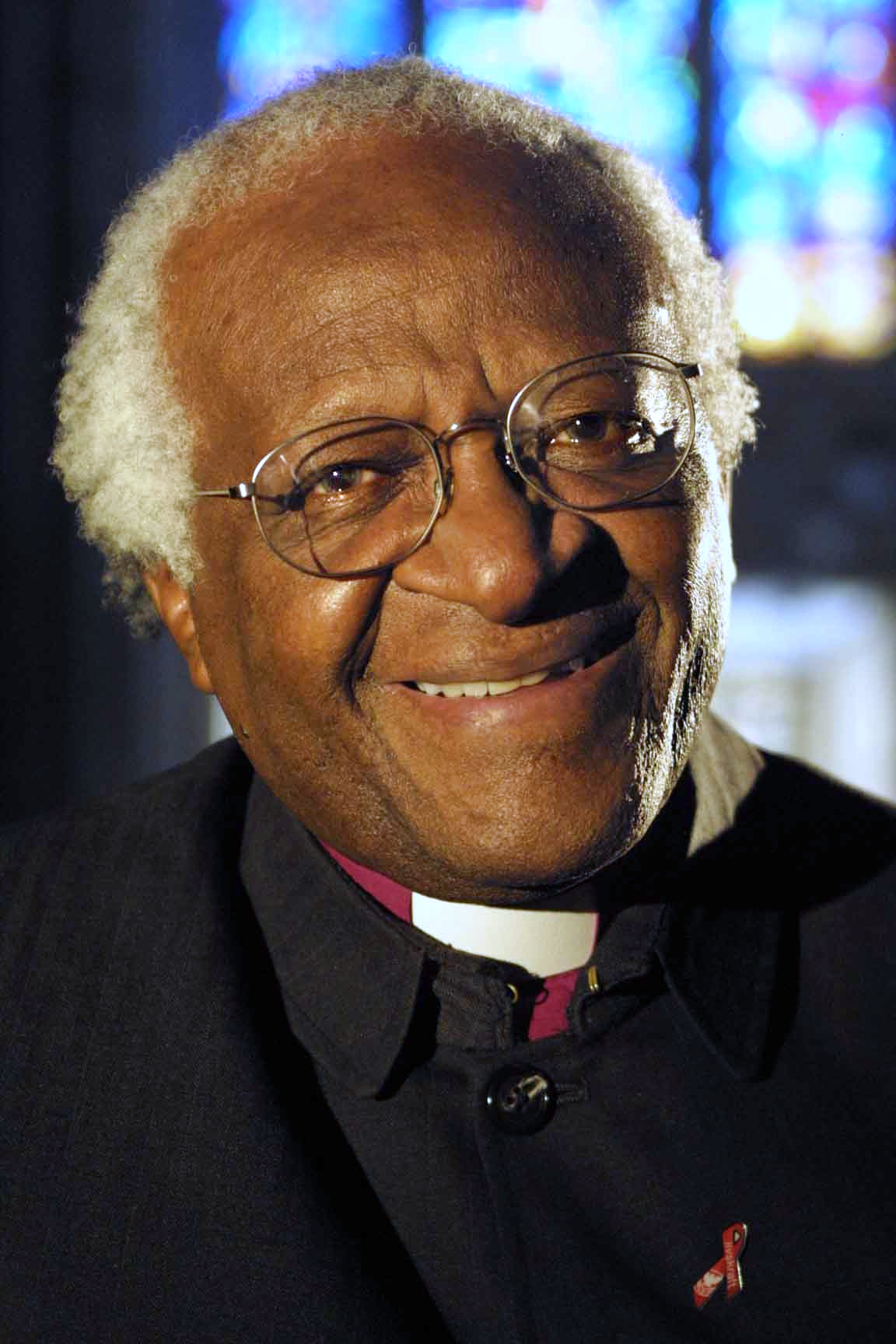
I have just been reading through some Desmond Tutu quotes. I find him to be such an inspiration. For those of you who don't know anything about him, he was the first black Anglican Archbishop of Cape Town in South Africa. During the 1980's he won the Nobel Peace Prize for his work toward finding a peaceful end to apartheid. What makes him even more remarkable in my mind is that after helping to end apartheid, he helped to build a peaceful society based on the principles of forgiveness. When Nelson Mandela was elected president of South Africa, it would have been easy for the black South Africans to avenge themselves for the horrible racism, oppression, and violence they had experienced for so long. Thanks to brilliant leaders like Tutu and Mandela, they instead chose forgiveness. Tutu advocated a justice commission that would encourage the violators and victims to come forward and share their stories in exchange for amnesty. Tutu has said many times before that violence is cyclical, solving violence with more violence only creates a chain of violence that never ends.

I had the privilege of hearing Archbishop Tutu speak when I was a freshman at Baylor University. At the time, I did not know much about him, but his words have resonated with me ever since. He is one of my heroes, a man with much compassion, courage, joy, and love. Today I needed to think about Archbishop Tutu because of my own struggles with peace and forgiveness. You see, Tutu understands a basic aspect of Christianity that often eludes me but that has become increasingly obvious in my search for peace; namely, that peace is bound together with all the other Christian virtues: love, joy, patience, goodness, kindness, gentleness, self-control, and even forgiveness. Forgiveness is the central theme of the Gospel. It is a virtue advocated numerous times in the Bible, but it is in some ways the most difficult part of the Gospel. When we pray in the Lord's Prayer, "Forgive us our trespasses as we forgive those who trespass against us," we would like to leave the last part of the sentence off. We want forgiveness, but we don't always want to give it or even know how to forgive.

The last few days have reminded me of some of my own deeper grudges and resentment. For various reasons, I have been reminded of some past hurts, some past incidents when others have trespassed against me. As I see others (or even some of the same people) committing acts that remind me of what happened to me, I become angry. I don't think my anger is unjustified or completely irrational although clearly I don't know the full story in many of these cases, so my first reaction is to rectify or to punish somehow those I see as the perpetrators. I want them to feel my pain and the pain I perceive they have caused to others. I certainly don't want to forgive them, but this interferes with my own personal peace.

Today as I tried to meditate, I couldn't find shalom. I was instead distracted with angry thoughts. You see, I am convinced these people are acting wrongly, so I find it easy to justify my anger and stew in it. That is when I am reminded of Archbishop Tutu. Black South Africans were systematically oppressed, abused, and even killed for decades, yet when the tables were turned, they chose not to punish, but to forgive, even though punishment would have been justified. They understand something that I struggle to understand, that justice is restorative, not retributive (not an exact quote of Tutu, but close enough). Peace comes through restoration of relationships which can only be achieved through forgiveness. This is not to say that we should not be held accountable for our actions, but rather that we should seek to restore relationships with those who have hurt us rather than breaking those relationships or harboring resentment. What a monumental task!

So now I am sitting here thinking about Desmond Tutu and how he extended forgiveness instead of a closed fist. I am wondering how I can do the same and hoping that the same Spirit can give me the strength to do so and heal my past hurts, restore my broken relationships, and fill me with shalom.

  • Digg
  • Del.icio.us
  • StumbleUpon
  • Reddit
  • RSS

My Year of Peace: Shalom


Yesterday I heard many of my students and coworkers talking about what they were giving up for Lent. I appreciate the practice, and even though I am not Catholic, I have in the past given up certain foods or practices for Lent. This year, I want to try something a little different. I want to add something to enhance my spiritual life, mainly because I think God has been gently nudging me in this direction for some time now. I have decided to spend 15 minutes a day in meditation. It is a small thing really, but I think for me it will make a big difference especially as I pursue peace.

At our faculty retreat on Monday, one of my colleagues led a session on meditation. While it was not my first time to meditate, I did learn something interesting. All of the world's major religions practice meditation (although I must say that being raised as an evangelical Protestant, I was not really taught how to meditate ever). In meditation, one sits in total stillness and quiet, concentrating on breathing and focusing on one word or phrase (sometimes called a mantra). The mantra word is completely up to the person meditating, but in the Judeo-Christian tradition, the word shalom tends to be the most common.

Shalom is one of the few Hebrew words I am familiar with. I know that it means "peace" similar to the Arabic word salaam (which is where the word Islam also derives, despite erroneous assumptions about the nature of that particular religion). However, I also know that languages don't often translate so directly, so I decided to look up the word to learn more about its significant. It is probably now my new favorite word. In English, the word peace often refers to a feeling of calm or an absence of conflict, but when English Bibles translate the word shalom as peace, they are leaving out part of the meaning. Shalom does mean peace the same as in English, but it also means wholeness. As I understand it then, shalom is a state of being in which one is internally and spiritually whole, leading to internal and spiritual peace, which then helps us to transcend and heal the brokenness of the world around us. What a beautiful concept, especially for Lent, when Christians are reminded of our own brokenness.

So shalom is my new favorite word because if there is one thing I have learned through my journey towards peace, it is that peace begins within us and then expands to the world around us. This will be my mantra for the season of Lent, and it really is an excellent word to focus on during meditation because one of the purposes of meditation is to allow God's peace to fill us and make us whole (which sounds a lot like the word holy right). If Lent is meant to be a time to prepare us for our celebration of the Passion and Easter, I think it will be good for me to observe it by spending time each day realizing my own incompleteness and inviting God to fill me.

To make this even better, in Middle Eastern cultures, it is common to greet another person with the word shalom or salaam. What a great way to greet someone! You are basically telling them that you wish them healing, wholeness, and peace. It sure beats "What's up" or "Hey." So I bid you all shalom (or salaam if you prefer). May you find wholeness and peace each day in your own lives.

  • Digg
  • Del.icio.us
  • StumbleUpon
  • Reddit
  • RSS

My Year of Peace: Peace and Fear

The greatest enemy of peace is fear. Some people erroneously equate the two, suggesting that people choose pacifism because they fear fighting or fear war. In fact, fear is the motivation for war and fighting, not for peace. Peace cannot be lived without great courage, supernatural courage. I don't think anyone would accuse Gandhi or MLK of being cowards, yet they were pacifists, the kind of bold pacifists whose courage still inspires us.

Fear is really at its core a basic instinct. It is one thing that we share with all animals. I believe that if most of us are honest, we could identify dozens of experiences in our daily lives when our immediate emotional response to a situation is fear. If we are being even more honest, I would bet that we could even admit that we act out of that emotional response far more often than not. Fear is universal, an instinct we are all born with. It is our mind's way to protect us from pain, physical and emotional. Courage is not an absence of fear. Courage merely recognizes fear and chooses to act in spite of fear. That is why peace and love are ultimately courageous acts and why war and violence is not, which is not to say that war is absent of individual acts of courage.

Wars are fought out of fear. We might dress up our justifications with fancy names and ideologies, but the ultimate origin of all war is fear. Right now our country is engaged in two wars primarily because we are afraid of terrorism, afraid that democracy might not be powerful enough to stand on its own without weapons backing it, and afraid that America and its values might become irrelevant or might even be offensive to some. We might say we are fighting for liberty and an end to tyranny, but the truth is that we are afraid. What peace asks us to do is to recognize those fears and simply to deny them, not through ignorance or recklessness, but through faith and love. I fear terrorism as much as anyone. I fear extremism. I fear tyranny. However, I believe that peace is stronger than war, that love is stronger than hate, that freedom is stronger than tyranny, that courage is stronger than terror, and that wisdom is stronger than extremism.

Some days, I struggle to believe this. Some days, I doubt. Some days, I lose faith in the power of good over evil. On those days, I pray for the peace that passes understanding and the love that makes us more than conquerors. Peace is not naive optimism. It is not ignorant. It is not passive. It is hope and love, and it is bold. I don't just hope for a peaceful world someday. I must live peace now even when it scares me.

  • Digg
  • Del.icio.us
  • StumbleUpon
  • Reddit
  • RSS

My Year of Peace: The Mindset of War

War has a number of negative effects: lives lost, infrastructures devastated, money wasted, psyches damaged, cultures eliminated - the list continues because the cost of war can never be measured, can never be balanced with its benefits, and since each war only propagates more wars in its wake, our war debts (financial, emotional, physical, political, religious, cultural, and personal) continue to grow.

For my entire life, my country has been at war. Some of those wars were more official, like the two we are currently involved in. Some were more covert, like our wars in Latin America in the 1980s. I have been fortunate though not to have faced any of these war tolls personally. I have not lost family members (though many Americans have). I have not lost my home, my job, my culture, my mind (though many worldwide have). It is easy for America to wage continual war as long as the effects of our warmongering stay mostly isolated in the Middle East, Latin America, Asia, or Africa. When the effects of our warmongering do come home to roost, we just use them as an excuse to wage more wars.

One effect of war that has cost our society very dearly is one that most people do not detect. Our endless wars have turned us all into mini-warmongers. In America, everything is a war, a civil war. I guess it was about two decades ago that we declared war on drugs. We have been fighting the "culture wars" for over two decades (with tensions only escalating). We war over the economy. We even war over providing health care to the needy.

Growing up in America, I was always taught to identify my enemies, taught to be paranoid about the next threat to my security, taught to defend myself. I wasn't really taught how to love, how to respect, how to heal, how to create. By the time I graduated college, my enemies list was pretty substantial (and growing), quite the problem for a professed pacifist. I would also argue that it is quite the problem for a professed Christian too.

Growing up Christian actually exacerbated this problem. I was taught to identify Satan much more easily than I was ever taught to identify Jesus. Satan is everywhere, in the abortion clinics, the gay rights activists, illegal immigrants, other religions, communism, television, R-rated movies, video games, the Internet, just about anywhere but the Bible. Of course, even the Bible isn't safe really because I, and any Christian that doesn't proscribe to a particular theology, could also be deceived and, therefore, misinterpret God's words. Jesus, on the other hand, seemed to be largely absent from much of my Christian upbringing. I don't remember being taught how to identify God's presence in the people I met, the media, politics, or even myself. I was raised in a religion that teaches that God dwells in us and among us, but I was much more aware of the presence of "the Enemy."

I don't blame my Christian upbringing for this problem. I merely wish to illustrate how pervasive the mindset of war is in American life. It is so powerful that it can even corrupt those who worship the Prince of Peace. Certainly Christians need to step back and ask ourselves, how have we contributed to this problem? Still, I don't think that the essential teachings of Christianity - like salvation by grace, really are the problem. The problem is that Christians don't take these teaching seriously enough. We don't extend grace to those we disagree with or even those we do. We don't love our neighbors as ourselves. Hell, we don't even love ourselves. And it is here that we come to the ultimate cost of the war mindset - when everyone is an enemy, the real enemy is ourselves.

In warmongering America, we have become our own worst enemies, which is why it is essential that peace begin internally. Until I can make peace with myself and my situation, how can I really make peace with anyone else? As a Christian, I must hold firm to the fundamental belief that God is omnipresent, omniscient, omnipotent, and omni-love. If that is the case, then shouldn't I be seeing Jesus everywhere instead of Satan. I am not looking for anyone to blame for this crisis. It is not the fault of our churches, our government, our schools, our courts, or even our enemies. It is our own. I don't experience peace because my mindset is not a peaceful one. My world is not a peaceful one because I make it into a warring one.

Peace begins here. It begins with having a conversation with a friend and not worrying if he says something I don't agree with. It begins with learning something from a friend who practices another religion. It begins with watching the news without a sense of fear and dread but with a stubborn insistence on hope. It begins with caring about the needs of others. It begins with loving rather than fearing. It begins with extending forgiveness without conditions. It begins with seeing the image of God in myself, my family, my neighbors, and even my enemies.

  • Digg
  • Del.icio.us
  • StumbleUpon
  • Reddit
  • RSS

My Year of Peace: Peace and Classroom Management

As I seek to be more peaceful in my personal llife, I have also tried to be very intentional about peacemaking in my professional life. Much of the impetus for my quest for peace has come from the actions of my school's Diversity Club and Solidarity Committee. This year, our focus is "Waging Peace," and I have had some really interesting discussions with colleagues and students about ways to wage peace in our school while also encouraging international peace efforts. It has been such a humbling experience. I have always considered myself a pacifist, but when I was in high school, I never gave it the kind of careful consideration that my students are giving it. They serve as such inspiring examples for the whole school community.

Over the last few weeks, a couple of interesting situations have come up in my workplace that have really given me opportunities to apply my own efforts to "wage peace." One of my classes has been challenging the last couple of weeks. My first thought was that I could just crack down and start assigning detentions to the students who were off task or causing distractions, but I paused to consider if that was going to be the most effective way to work with these students. Really the problem was minor, just three or four students were continually off task and in general seemed to have bad attitudes. Assigning detentions may have been an acceptable short term solution (even though I rarely use it), but I felt like if I assigned the detentions, it would bring short term peace, but not long term peace. I decided to observe the students who were off task much more carefully over the next week to see if I could determine the root of the problem.

What I noticed was that one student seemed to be the main "ringleader" for the others. They all took their cues from her. When one would say something distracting, she would turn to this girl to see if she approved. I thought about the best way to approach this particular student. Her grades had been dropping in recent weeks, and she seemed to be upset about something. She is a very intelligent student, so I decided that I needed to talk to her. Peacekeeping is always the easiest solution, but it does not lead to long term peace. Waging peace requires us to work diligently and patiently, and it depends on good communication. It would have been peacekeeping for me to just give her a detention and a heavy handed punishment, but deep down whatever resentment she was building for my class or school in general would have simply increased even if she modified her behavior to avoid detentions.

Instilling fear in students will keep quiet, at its best only the illusion of peace. I know as a teacher, it is easy to settle for these short term solutions because they are quick and simple and allow most of us to get quick results with minimal conflict. Still I asked myself, "Is this real peace?" Behavior and performance modification is not my goal as a teacher. I want my students to learn and grow. In fact, behavior and performance modification are hindrances to growth because they provide the illusion of growth as a substitute for real growth.

I decided to talk to the student, not in a confrontational way. I try really hard to avoid commanding students to respect me and their classmates. If I have to demand their respect through fear or guilt tactics, then I probably don't deserve it in the first place. I simply pointed out to the student that I noticed her grades had dropped and that she had seemed very distracted in my class. Then I asked her to tell me what she felt was going on and how the two of us could work together to make things better. It is important to give students ownership of their own education and conduct and to show them that you are working together, not against each other.

I did not expect this one conversation to be the be all and the end all. I hoped it would be a good first step in building a good relationship with this student so that she and the others in my class could have the best opportunity to learn. She did not point out any specific solutions we could try. She may not have even taken this conversation very seriously. She may not respect me at all at this point. Still, I believe that she knows I am not oblivious to her, that I noticed something was different, that I will not just let her hijack the class (even if I am not a heavy handed disciplinarian). I have noticed a difference. It is not a night and day difference, just a small one. I imagine that I might need to have more of these talks with her or her classmates, but this first step is so important.

Peaceful relationships begin by establishing trust. Once that foundation is in place, conflict resolution can begin in earnest. This is not a quick process because the issues that bring us into conflict rarely develop quickly even if the precipitating events for conflict seem sudden. If we only react to precipitating events and refuse to address the motivations and conditions behind those events, we are not really waging peace, just keeping quiet. I don't want a quiet classroom; I want a peaceful one even if it takes more work to get there.

  • Digg
  • Del.icio.us
  • StumbleUpon
  • Reddit
  • RSS

My Year of Peace: International Day of Peace

Happy International Day of Peace! On September 21, 1981, International Day of Peace was born (only a few months after me). The United Nations conceived this day as a memorial to the end of war worldwide.

IDoP celebrates the movement for political peace. My own journey focuses on spiritual peace, but I find that the two are clearly linked. In the spirit of today, I thought I would share a few thoughts about my political pacifism, since most of my other posts focus more on spiritual issues. For me, the two are inextricably linked. I cannot live a peaceful life without mourning the cost of war even if it does not seem to affect me directly.

I don't support war. I know that can be a problematic statement. It does not mean that I do not support the armed services. I just do not support war as a political policy. I know that the issues are complex, but I do not believe that violence can ever truly end violence. It may be the easiest temporary solution. Certainly wars have been fought for valid reasons, but I do not believe that wars can really bring about peace. I know that most governments would prefer peace to war, but I think that some of them do not do the difficult work that is required in order to "wage peace."

I can't think of a single war that has brought long-term peace. World War II certainly ended some grave atrocities, but it also led directly to the Cold War, which led to many more lost lives all over the world (many of them ironically in ways eerily similar to the Holocaust). We are still reaping the consequences of our militaristic national policies back in the early part of the 20th century. I know the "War on Terror," is more than just an off-shoot of the World Wars, but I think that few people would deny the many connections between them.

For the last eight years, our nation has been waging two wars. There seems to be no real end in sight even though many politicians have promised we are "making progress." How do we measure the "progress" of war? Do we measure it by how many lives are lost, or do we measure it by how "peaceful" Iraq becomes? How can peace come during an eight year war? Even if we do achieve our objectives in Iraq and Afghanistan, objectives that have always been unclear to me at best, do we really believe that we will institute sustainable peaceful governments there. By showing the rest of the world that we use violence to solve our international disputes, don't we teach them that terrorism really is a viable option? War destroys infrastructures, destroys lives, destroys morals, and destroys morale. Aren't these the very conditions that lead to terrorism and more war?

I am a pacifist. That does not mean that I believe that America should back down from evil and oppression. It simply means that I believe we should not use war as a foreign policy. I do not know what the solution to terrorism is or how we can best achieve world peace, but I am sure that the answer is not war.

  • Digg
  • Del.icio.us
  • StumbleUpon
  • Reddit
  • RSS

My Year of Peace: Peaceful Conflict

Conflict... a scary word for many peaceful people. I am a master at conflict avoidance, and I have a bag full of passive aggressive tricks that help me to fight dirty while still looking quite peaceful when I am forced to deal with conflict. As I am pursuing being a more peaceful person, I already know that the area of conflict is going to be one of my biggest challenges.

It kicked off immediately this week. It was not a very personal conflict, and much of it was actually related to things that I read online that I disagree with. For many people, this kind of conflict is easy, but it tends to be the area where I fight dirtiest, where I am least peaceful. The cover of a computer screen emboldens me to attack more brutally and sarcastically than I usually do in person, especially over issues that really do matter to me personally. One of those issues is the whole gender issue. I am an egalitarian, and I feel very strongly about it, but I do not always offer much grace to those who don't see things my way.

Earlier this week, I was reading the Christians for Biblical Equality blog. They had a really interesting post about hyphenated names that I had already read, but I decided I wanted to read it again. I was scrolling through the comments and noticed a few that really annoyed me. One person equated name hyphenation with wives rebelling against their husbands. Another just started blasting egalitarians in general with most of the usual attacks. I started to tense up, but then I noticed that one of the egalitarian members started launching fairly juvenile attacks right back at the second offensive commenter. I paused for a second because her attacks also made me tense up. She made many assumptions about the anonymous commenter that made me very uncomfortable. This was clearly a case of two people fighting dirty. Fortunately, one of the admins posted a long comment in which he addressed both and illustrated how to disagree in a peaceful way. He merely expressed what he did and did not believe in a respectful and intelligent way.

This was an important illustration for me because I was faced with some similar conflicts later in the week. One of them was at work during lunch when I sat down in the middle of a debate about health care. I feel strongly that our health care system needs reform, but I am not sure what is the best way to go about it. I know that my views are somewhere in the middle of the current debate, but I am sadly not informed enough (despite reading articles about it from both sides) to state my views very clearly. In this situation, I realized that listening would be a more fruitful and peaceful way to participate in this debate, and I was participating. Listening is an action, and sometimes it is the only correct action to take during a conflict. I actually learned a lot from my colleagues and walked away with respect for each of them, no matter their opinions on the subject.

I won't really share the details of the other incident except to say that in this case, simply listening silently was not the best course of action. The issue at hand was one that I am very informed about and is very personal to me. The person I disagreed with had said something mostly in jest. Normally, my fear of conflict would tell me to say nothing, but I would hold that joke against the person. That is not real peace, so I decided to share my feelings about it. The result was actually very pleasant. I walked away with a much greater respect for the other person, and I felt good that I had shared how I felt rather than simply holding a grudge about it.

Peace is not an easy black and white way of living. It requires wisdom, and most of all, it requires me to consider my actions prayerfully.

  • Digg
  • Del.icio.us
  • StumbleUpon
  • Reddit
  • RSS

My Year of Peace

Over a year ago, I took a personality profile that told me I was a "peaceful" person. It really had me completely pegged, all of my strengths and weaknesses. Since then, I think I have been coming to terms with the idea. I think that in the past I have been hesitant to embrace my peacefulness because we live in a culture that frankly does not value peace, nor is it seen as a masculine quality. Well, our culture is wrong about a lot of things, and this is yet another one to add to the list. I am a peaceful man. I have always been most at home when I have been at peace, but part of me has always resisted, and far too often I have settled for temporary peacekeeping rather than peacemaking.

Over the last week, I have heard God calling me to peace. The Diversity Club on campus has made "waging peace" their theme for the year, and on Tuesday, they invited me to join them to speak about my visit to the Peace Palace in Den Haag this summer. I felt honored to be there, and their words challenged me to think about my own pursuit of peace. I am at my best when I am at peace. I have learned this about myself, so it really makes sense that I should seek to "wage peace" around me. I am not sure exactly what it will look like yet, and I kicked off the week by posting a sarcastic political remark on my Facebook page (clearly I have some work to do). So this is my challenge, to "wage peace" for this next year.

I started my day today reading in my "Year Bible," and I came across this verse: "Blessed are the peacemakers, for they shall be called children of God." I think those are good words of encouragement for me as I start this new phase of my journey.

  • Digg
  • Del.icio.us
  • StumbleUpon
  • Reddit
  • RSS