RSS

Submission

You thought I was going to talk about gender roles, didn't you? :) No, I'm going to talk about submitting my dissertation.


(This photo of my workspace was taken in December, hence the Christmas tree... Picture it with no tree and waaaaay more library books).

Tonight at 11:30 pm (which still counts as Friday!) I emailed my adviser a draft of my entire dissertation. His review will determine whether I defend in April or this summer (but I really think/hope it will be April!).

I have been working around the clock on it the last several weeks. Many of my colleagues at this stage say they accomplish more on their dissertation in a day than they did in a week earlier in the process, and that's been true for me. I know where it's all going, it's just a matter of tying it up neatly. It's amazing that I have written so many pages on an original topic from original research. I'm not bragging, I'm just proud of myself. It's 230 pages of blood, sweat, and tears. Mostly tears, if you ask Eric. ;)

So this is the first big step of the end. There will be another adviser review, a committee review, a defense, and a dean's review. That's a lot of reviews! But I am a proponent in life of celebrating every step, marking moments, and acknowledging all the hard work it's taken to get to a certain point.

It has not been an easy week. I'm sleep deprived, having worked til around 3 in the morning most days. And I haven't felt well, as I've been staving off a cold and suffering some allergies. Eric has been awesome - he's done my portion of the housework (we divide evenly on normal weeks, so picking up my entire share was a lot on top of him finishing up school before spring break), watched a movie he had no interest in b/c it made me laugh, gave me a foot rub, prepared dinner every night, ran errands, helped me fix sentences that just weren't working, and in general tried to relieve every stress he could for me. He's such an amazing partner. And I've received lots of other support, too.

Tonight, I had pretty severe nausea and some shooting stomach pains - mostly anxiety, I think, but probably also related to the lack of sleep and lack of quality nutrition. Just before I had my review draft ready to email to my professor, the internet went out in our house. Of course it did.

So I packed up my laptop and we headed to a wine bar down the street, the closest place open with wi-fi. And we got champagne (well, Cava actually) to celebrate. Like I said, it's important to commemorate every step.

I've got a few days to relax before I get back to it. I've got more library dives and revisions and meetings and loose ends. I liken this stage to the last few miles of a marathon... You know, the part where the body gives out and your adrenaline takes over to enable you to finish.

But I'm almost there...

  • Digg
  • Del.icio.us
  • StumbleUpon
  • Reddit
  • RSS

Eleven Days, Eleventh Hour

I'm turning my dissertation into my adviser in 11 days. Eleven days.

I'm simultaneously ecstatic and terrified.

And I can't believe that in a few months, the process will be complete.

And that's about all I can process at this point, but... this is huge.

  • Digg
  • Del.icio.us
  • StumbleUpon
  • Reddit
  • RSS

My Year of Peace: Peace and Forgiveness


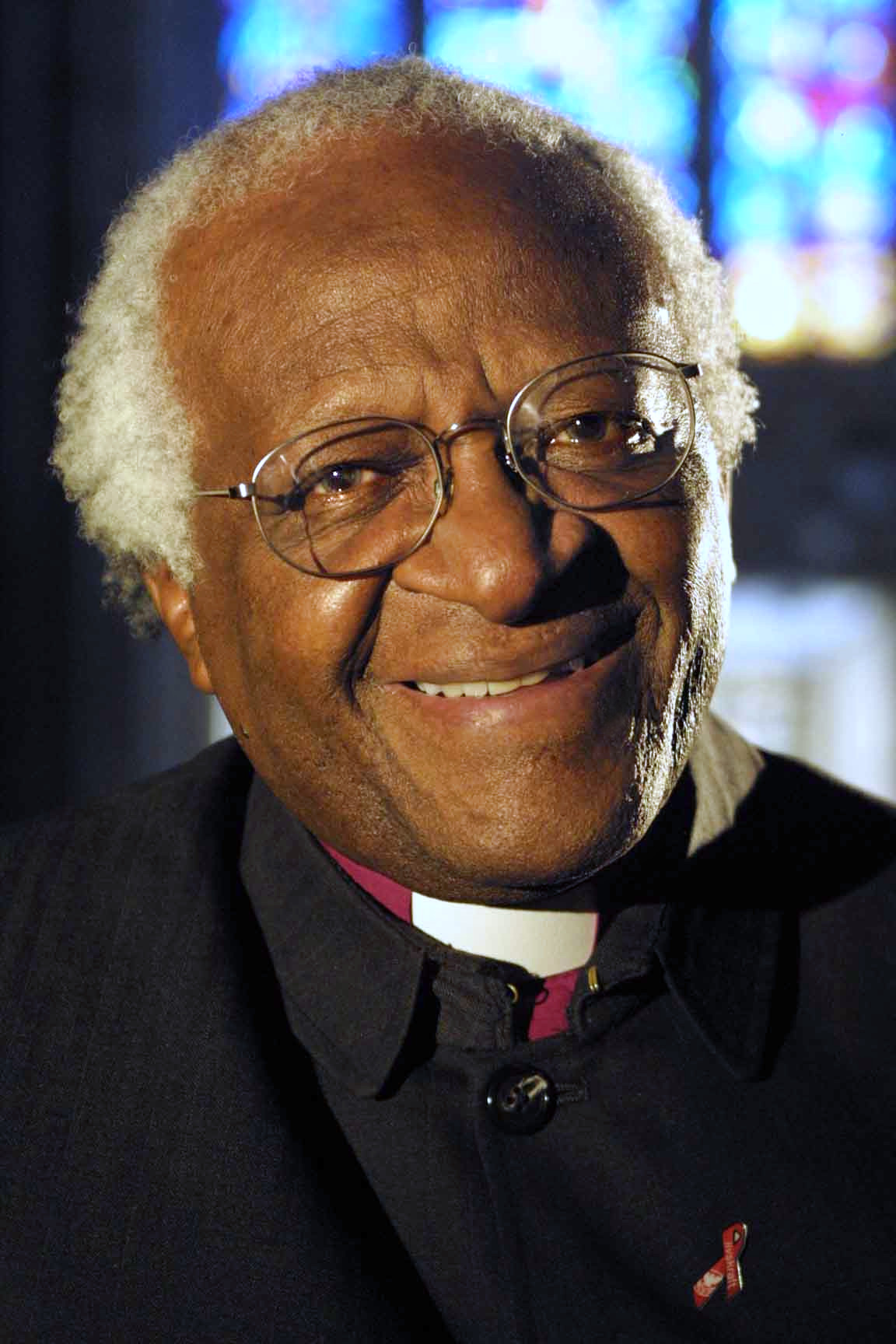
I have just been reading through some Desmond Tutu quotes. I find him to be such an inspiration. For those of you who don't know anything about him, he was the first black Anglican Archbishop of Cape Town in South Africa. During the 1980's he won the Nobel Peace Prize for his work toward finding a peaceful end to apartheid. What makes him even more remarkable in my mind is that after helping to end apartheid, he helped to build a peaceful society based on the principles of forgiveness. When Nelson Mandela was elected president of South Africa, it would have been easy for the black South Africans to avenge themselves for the horrible racism, oppression, and violence they had experienced for so long. Thanks to brilliant leaders like Tutu and Mandela, they instead chose forgiveness. Tutu advocated a justice commission that would encourage the violators and victims to come forward and share their stories in exchange for amnesty. Tutu has said many times before that violence is cyclical, solving violence with more violence only creates a chain of violence that never ends.

I had the privilege of hearing Archbishop Tutu speak when I was a freshman at Baylor University. At the time, I did not know much about him, but his words have resonated with me ever since. He is one of my heroes, a man with much compassion, courage, joy, and love. Today I needed to think about Archbishop Tutu because of my own struggles with peace and forgiveness. You see, Tutu understands a basic aspect of Christianity that often eludes me but that has become increasingly obvious in my search for peace; namely, that peace is bound together with all the other Christian virtues: love, joy, patience, goodness, kindness, gentleness, self-control, and even forgiveness. Forgiveness is the central theme of the Gospel. It is a virtue advocated numerous times in the Bible, but it is in some ways the most difficult part of the Gospel. When we pray in the Lord's Prayer, "Forgive us our trespasses as we forgive those who trespass against us," we would like to leave the last part of the sentence off. We want forgiveness, but we don't always want to give it or even know how to forgive.

The last few days have reminded me of some of my own deeper grudges and resentment. For various reasons, I have been reminded of some past hurts, some past incidents when others have trespassed against me. As I see others (or even some of the same people) committing acts that remind me of what happened to me, I become angry. I don't think my anger is unjustified or completely irrational although clearly I don't know the full story in many of these cases, so my first reaction is to rectify or to punish somehow those I see as the perpetrators. I want them to feel my pain and the pain I perceive they have caused to others. I certainly don't want to forgive them, but this interferes with my own personal peace.

Today as I tried to meditate, I couldn't find shalom. I was instead distracted with angry thoughts. You see, I am convinced these people are acting wrongly, so I find it easy to justify my anger and stew in it. That is when I am reminded of Archbishop Tutu. Black South Africans were systematically oppressed, abused, and even killed for decades, yet when the tables were turned, they chose not to punish, but to forgive, even though punishment would have been justified. They understand something that I struggle to understand, that justice is restorative, not retributive (not an exact quote of Tutu, but close enough). Peace comes through restoration of relationships which can only be achieved through forgiveness. This is not to say that we should not be held accountable for our actions, but rather that we should seek to restore relationships with those who have hurt us rather than breaking those relationships or harboring resentment. What a monumental task!

So now I am sitting here thinking about Desmond Tutu and how he extended forgiveness instead of a closed fist. I am wondering how I can do the same and hoping that the same Spirit can give me the strength to do so and heal my past hurts, restore my broken relationships, and fill me with shalom.

  • Digg
  • Del.icio.us
  • StumbleUpon
  • Reddit
  • RSS

My Year of Peace: Shalom


Yesterday I heard many of my students and coworkers talking about what they were giving up for Lent. I appreciate the practice, and even though I am not Catholic, I have in the past given up certain foods or practices for Lent. This year, I want to try something a little different. I want to add something to enhance my spiritual life, mainly because I think God has been gently nudging me in this direction for some time now. I have decided to spend 15 minutes a day in meditation. It is a small thing really, but I think for me it will make a big difference especially as I pursue peace.

At our faculty retreat on Monday, one of my colleagues led a session on meditation. While it was not my first time to meditate, I did learn something interesting. All of the world's major religions practice meditation (although I must say that being raised as an evangelical Protestant, I was not really taught how to meditate ever). In meditation, one sits in total stillness and quiet, concentrating on breathing and focusing on one word or phrase (sometimes called a mantra). The mantra word is completely up to the person meditating, but in the Judeo-Christian tradition, the word shalom tends to be the most common.

Shalom is one of the few Hebrew words I am familiar with. I know that it means "peace" similar to the Arabic word salaam (which is where the word Islam also derives, despite erroneous assumptions about the nature of that particular religion). However, I also know that languages don't often translate so directly, so I decided to look up the word to learn more about its significant. It is probably now my new favorite word. In English, the word peace often refers to a feeling of calm or an absence of conflict, but when English Bibles translate the word shalom as peace, they are leaving out part of the meaning. Shalom does mean peace the same as in English, but it also means wholeness. As I understand it then, shalom is a state of being in which one is internally and spiritually whole, leading to internal and spiritual peace, which then helps us to transcend and heal the brokenness of the world around us. What a beautiful concept, especially for Lent, when Christians are reminded of our own brokenness.

So shalom is my new favorite word because if there is one thing I have learned through my journey towards peace, it is that peace begins within us and then expands to the world around us. This will be my mantra for the season of Lent, and it really is an excellent word to focus on during meditation because one of the purposes of meditation is to allow God's peace to fill us and make us whole (which sounds a lot like the word holy right). If Lent is meant to be a time to prepare us for our celebration of the Passion and Easter, I think it will be good for me to observe it by spending time each day realizing my own incompleteness and inviting God to fill me.

To make this even better, in Middle Eastern cultures, it is common to greet another person with the word shalom or salaam. What a great way to greet someone! You are basically telling them that you wish them healing, wholeness, and peace. It sure beats "What's up" or "Hey." So I bid you all shalom (or salaam if you prefer). May you find wholeness and peace each day in your own lives.

  • Digg
  • Del.icio.us
  • StumbleUpon
  • Reddit
  • RSS

DIY Typewriter Cards

My mom still has her electric typewriter from college. It currently lives in a cabinet and serves to prop up a TV, but she still has it. She likes to remind me that "back in her day" all papers had to be typed. There were no computers to make it easy. As a layout editor for her university newspaper, I'm sure that was painful. But so are computers.

Anyway... I have little to no creative outlet at present b/c my dissertation is sucking the life out of me. So sometimes I get an uncontrollable urge to make something. Anything. I drew inspiration from several websites to create these valentine cards for my family.  I used Mom's old typewriter, some card stock, stickers, double-sided foam squares, and stamps.

When I create, I like to take things that evoke one feeling and combine them with something totally different (like the sports/bridal magazine collages). In this case, typewritten notes seem office-y or harsh to me, so I wanted to capture the nostalgia I feel for typewriters by making something romantic. (Yes, I even over-analyze my DIY projects!)

I started with scrap white card stock and fed it through the typewriter. The size of the type-written portion determined the size of the card. I folded the red card stock in half and glued the white on top of it. The insides are stamped with white ink to stand out on the red. I x-ed over the parts where I mis-typed and I think it's a bit more artistic that way.

 This one was for my parents, in honor of the Beetles. "LOVE" is made by four different stickers, raised with foam squares.

 
This was for Eric. I wrote him some prose as I typed. I intentionally ran the words off the sides. The sticker is flat, but I like the look of the raised ones better.

 
This is my favorite, made for my sister and brother-in-law. I love I Corinthians 13, but it's so cliche for a card like this. So to make it a little different, I typed it in Spanish. I stuck the heart right on top for visual interest (raised with a foam square).

You could do these for any occasion, and they would work for postcards too. Happy DIY!

  • Digg
  • Del.icio.us
  • StumbleUpon
  • Reddit
  • RSS

Who's Your Provider?

I hear constantly that men should be the provider. What people usually mean by that is they expect men to work hard at their jobs to make enough money so the rest of the family is fed, clothed, and happy.

When Eric and I decided to get married, out of respect he spoke to both my parents before the proposal. They asked him how he planned to provide for me and eventually for children. At the time, I was struggling with serious health issues, so part of their question was a sincere inquiry into his willingness to be the sole income-earner in the case that my health prevented me from working. He, of course, was and would be willing to do that if the need arose.

But I loved his answer. He told them that we would provide for each other. Provision would extend beyond financial concerns. He committed to providing inspiration and care and support to me, just as I would provide that to him.


He has said several times since we got married that he is glad he doesn't have the burden of "provider" in the traditional sense. He is glad he didn't sacrifice a job he loves and is gifted at in order to make more money. He is glad he isn't the spiritual provider in the sense that all spiritual decisions and knowledge are left to him. He is glad that he is connected to me (and later to our children) emotionally, not in a distant provider/protector sense.


Our commitment to provide for each other allows us to trust God to be our ultimate provider of Life and guidance. Christ is the head of our marriage, not one of us.

  • Digg
  • Del.icio.us
  • StumbleUpon
  • Reddit
  • RSS

Thank You Mr. Salinger

Last week, when I heard the news that J.D. Salinger had died, I was not surprised, but I was sad. Salinger's death represents for me the end of an era. For me it signals the decline of the Baby Boomer generation and a coming of age of my own.

I am thankful to Salinger for capturing teen angst and uncertainty with such precision. When I was a teenager, Catcher in the Rye caught my attention in a way no other novel had perhaps with the exception of The Great Gatsby. I was 18 when I first read it, and I was about to start classes at Baylor University, a school that I can't help but imagine bears a striking resemblance to Pencey Prep, at least in my then Holden-like state of mind. I could relate too well to Holden's hatred of all things phony, and also like Holden, I was not yet aware of my own phoniness. As the first person in my immediate family to attend college, I was nervous about entering the adult world. I didn't particularly trust many adults and did not really fit in with most teens. While I didn't sare Holden's affinity for deception, alcohol, and cigarettes, his rebellion resonated with me.

Later, my views on the novel would change as I outgrew Holden. I began to see his flaws as well as my own. After all these years, I still find the novel fascinating, beautiful, and haunting (like the best of Salinger's fiction). I have come to love some of his other work as well. "For Esme with Love and Squalor" remains one of my favorite short stories and reflects one of Salinger's other great talents: he writes great titles. Salinger writes about characters who are lost in modern society, who cannot come to terms with cruelty and alienation. Most of all, like myself, they are helpless romantics confronting a modernist reality that challenges all of their romantic idealism.

Perhaps my sadness about the loss of Salinger reflects a deeper sadness. Perhaps I am really mourning the end of an era that seems so romantic to me, an era of peace protests and folk music, an era where popular culture still seemed to have a purpose other than entertainment. I feel like Holden as he watches his sister riding the zoo carousel. He wants the carousel to go on forever, for time to stand still, for history to freeze, for childhood to remain. Maybe I want the romanticized ideal I have of past generations to be renewed even though it now seems gone forever, now just an unchanging relic in a history museum, right next to Holden's Eskimo friend.

I was surprised by the lack of fanfare for one of America's favorite writers. I suppose it resulted from Salinger's reclusive lifestyle and the fact that he stopped publishing decades ago. Still, I am saddened that the death of such an important artist does not go noticed. In contrast, the death of Michael Jackson, who also had not produced any work of note in the last decade and whose personal life is equally inscrutable, almost relaunched his career and is still garnering tributes. I chalk it up to my younger generation, constantly moving, constantly seeking to be entertained, constantly finding a new scandal to unearth and dissect.

I mourn our loss, at the same time knowing that change is inevitable, that I can't be the catcher in the rye, that my romantic ideals are more fantasy than fact, and that Holden has to grow up and move on at some point. Nevertheless, thank you, Mr. Salinger, for helping me to make sense of my own teenage confusion, for helping me to accept my own anger and helplessness, and most of all for helping me to see the beauty in my own brokenness. I hope you "find a place that's nice and peaceful."

  • Digg
  • Del.icio.us
  • StumbleUpon
  • Reddit
  • RSS